A FIELD NOTE BY ILLIA BITKOV SEATTLE / WASHINGTON
HOW TO CHOOSE THE RIGHT WEDDING PHOTOGRAPHER.
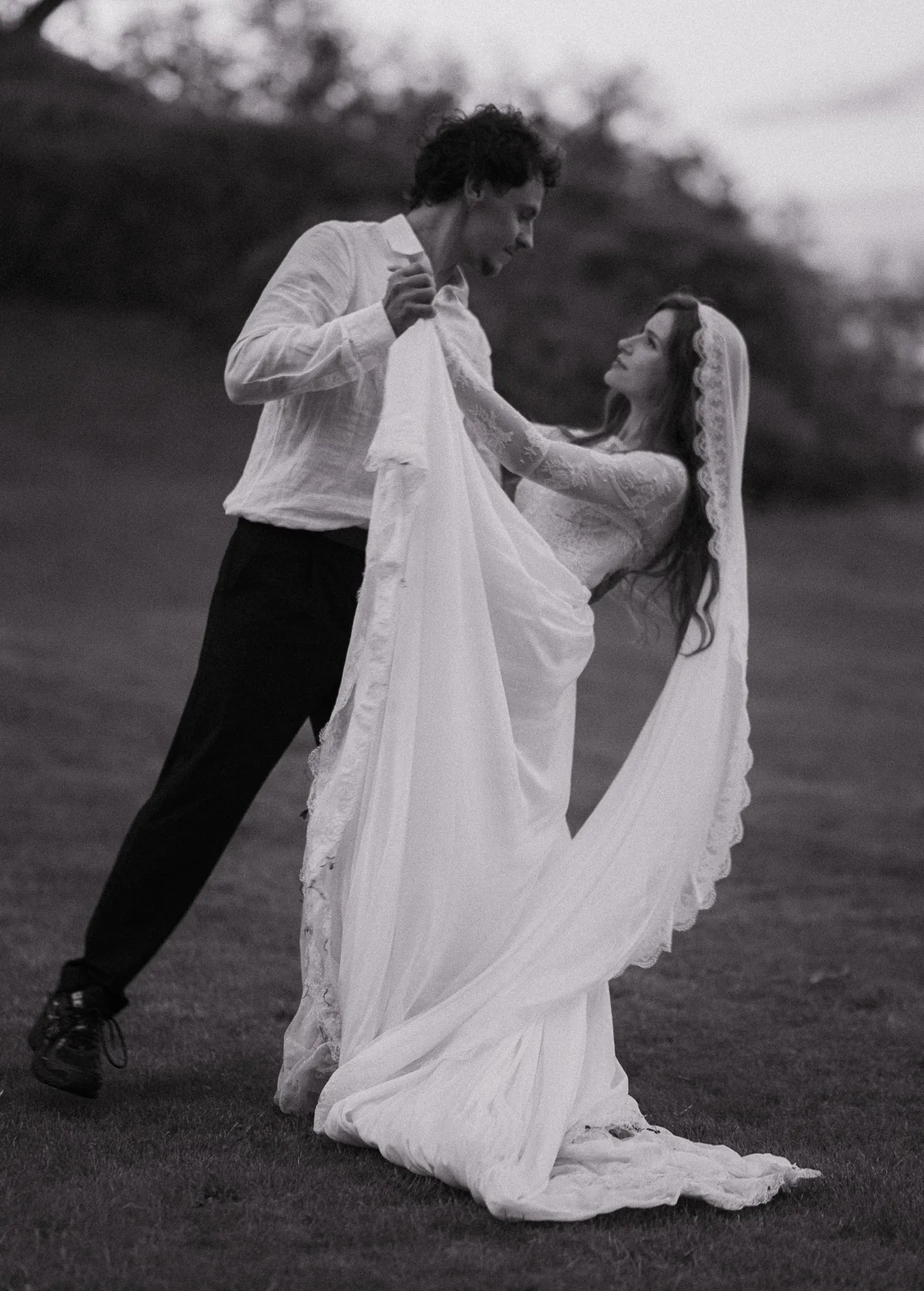
The right photographer is not simply the person with the prettiest Instagram grid. It is the person whose work, process and preparation you can trust when the day cannot be repeated.
This guide gives you the questions worth asking—and shows you what a thoughtful, professional answer should actually contain.
01 BEGIN WITH THE WORK
DO NOT CHOOSE A HIGHLIGHT REEL. CHOOSE CONSISTENCY.
A portfolio should make you feel something, but a full wedding gallery should make you trust the photographer.
Ask to see at least two complete galleries—not only the twenty strongest photographs from different weddings. Look for steady color, intentional framing and meaningful moments across the entire day: preparation, ceremony, family portraits, changing weather and a dark reception.
- PEOPLEDo expressions feel natural, and are different skin tones handled consistently?
- LIGHTDoes the work remain strong outdoors, indoors and after sunset?
- STORYDo wide scenes, portraits and small details feel like one connected day?


02 QUESTIONS WORTH ASKING
ASK FOR SPECIFICS. LISTEN FOR CLARITY.
A strong answer does not need to sound rehearsed. It should be direct, detailed and easy to understand.
CAN WE SEE COMPLETE WEDDING GALLERIES?
A strong answer: “Yes. I can show you full galleries from weddings with a timeline, venue or lighting conditions similar to yours.” The work should remain coherent long after the portfolio highlights end.
HOW DO YOU DIRECT PEOPLE WHO FEEL AWKWARD?
A strong answer: the photographer explains how they begin with clear direction, simple movement and adjustments that fit each couple. “Just be natural” is not a complete process.
WHAT IS YOUR PLAN FOR RAIN OR LOW LIGHT?
A strong answer: it includes a location or timeline alternative and the ability to use available light, flash or other lighting when needed—without making the photographs feel disconnected from the rest of the gallery.
WHO WILL ACTUALLY PHOTOGRAPH OUR WEDDING?
A strong answer: names the person who will arrive, clarifies whether an associate or second photographer is involved and puts that arrangement in writing.
WHAT HAPPENS IF YOU ARE SICK OR EQUIPMENT FAILS?
A strong answer: describes a professional backup network, at least one capable spare camera body and redundant essentials—not simply “that has never happened.”
HOW DO YOU PROTECT OUR FILES?
A strong answer: explains how photographs are recorded, copied and stored after the wedding. Look for more than one copy and a clear workflow that does not depend on a single card or drive.
WHAT WILL WE RECEIVE, AND WHEN?
A strong answer: clearly states the expected number of edited photographs, gallery format, delivery window, preview timing and printing permissions in both conversation and contract.
HOW DO YOU HELP WITH THE TIMELINE?
A strong answer: accounts for travel, family photographs, changing light and transitions between important moments. The photographer should help create enough room to work without taking over the day.

03 CAMERAS & BACKUP GEAR
ASK ABOUT REDUNDANCY. NOT LOGOS.
Canon, Nikon, Sony and other professional systems can all produce excellent work. The brand name matters far less than the photographer’s ability to use the system—and the preparation behind it.
Camera generation does matter, especially at a fast wedding in difficult light.
Compared with recent professional bodies, very old cameras generally have weaker autofocus, less usable quality at high ISO and a smaller dynamic range. That can reduce both the technical quality and the percentage of usable photographs during a dark ceremony, a moving entrance or a reception.
An older camera does not automatically make every photograph bad, and the newest camera does not make someone a good photographer. What you want is a capable, well-maintained system that consistently meets current professional expectations—with a real backup if something stops working.
TWO CAPABLE CAMERA BODIES
A primary and a ready backup suited to fast movement and low-light wedding coverage.
REDUNDANT RECORDING
Dual-card recording or another clearly explained method that avoids relying on one memory card.
LENSES & LIGHTING
Appropriate focal lengths, working flashes or lighting and enough batteries and cards for the full schedule.
A FILE BACKUP WORKFLOW
Multiple copies after the wedding, with a clear plan for storage until the finished gallery is delivered.
04 THE PART YOU SIGN
A GOOD FEELING STILL NEEDS A CLEAR CONTRACT.
The contract should match the conversation. Read it before paying and ask about anything that feels vague.
- COVERAGEWho photographs, how many hours are included and what happens if the timeline runs late.
- DELIVERYExpected gallery size, editing scope, preview timing and final delivery window.
- CHANGESRescheduling, cancellation, illness and the photographer’s backup plan.
- USE & PRIVACYPrinting permissions and whether the photographer may share the images publicly.
- PAYMENTThe retainer, remaining balance, travel costs and any overtime rate.
05 POPULAR QUESTIONS
WHAT COUPLES SHOULD KNOW BEFORE THEY BOOK.
How many photographers should we interview?
A small, focused shortlist is usually more useful than speaking with everyone. Compare complete work, communication and the actual experience each person offers. Once one photographer clearly fits your priorities and date, more calls rarely create more certainty.
Should price be the deciding factor?
Price matters, but compare what the price includes: coverage, editing, experience, backup preparation, delivery and the photographer you will actually work with. A lower number is not a better value if the process or result is unclear.
Does a larger photo count mean a better gallery?
Not by itself. A strong gallery needs enough photographs to tell the day completely, but consistency, timing and editing matter more than the largest possible number.
Do we need a second photographer?
It depends on the timeline, number of locations, guest count and whether simultaneous moments need coverage. Ask what the second photographer would add to your specific day instead of treating it as an automatic requirement.
Should we ask for RAW files?
The finished, edited gallery is normally the photographer’s complete work. It is more useful to understand the editing style, delivery format and printing permissions before booking than to evaluate unfinished files afterward.
What if we hate posing?
Ask the photographer to describe exactly how they direct couples. You can also read my guide for couples who hate posing for a movement-led approach that keeps photographs natural.

06 BEFORE YOU BOOK
YOUR FINAL CHECKLIST.
- You love the work beyond the first few portfolio images.
- You have reviewed at least two complete galleries.
- The photographer explains direction in a way that feels comfortable.
- Their low-light work and backup equipment inspire confidence.
- The file protection and delivery process is clear.
- The contract matches the package and your conversation.
- You trust how they communicate—not only how they photograph.

07 CHOOSE WITH CONFIDENCE
CHOOSE THE WORK. THEN CHOOSE THE PERSON YOU TRUST.
If the way I photograph and communicate feels right for your day, explore the wedding collections or tell me what you are planning. Your date and location can still be undecided.